
1] Explanations of the error
This error is referenced in three categories:
- Curved clips (EM221)
- Elliptical clips (EM222)
- Straight/Ragged clips (EM223)
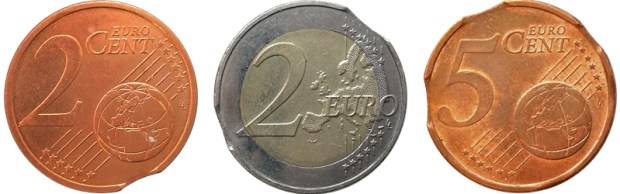 |
| Clipped coins with one / two / three clips |
This error appears when there is a problem with the advancement of the sheet when raising the press.
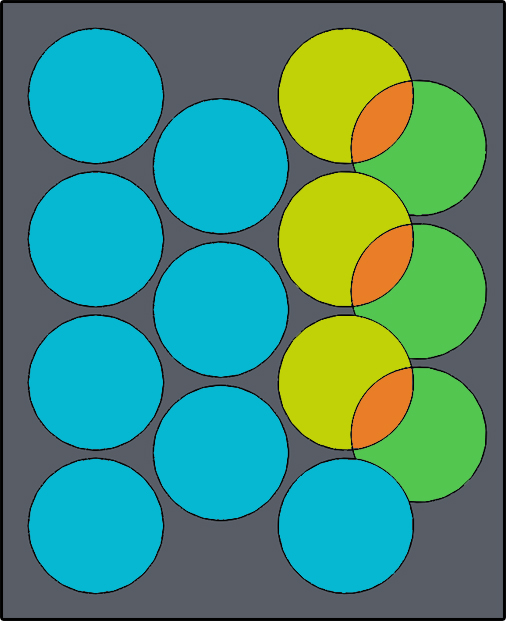
The punches cut the blanks with an offset. This has the consequence of cutting incomplete blanks (yellow).
 |
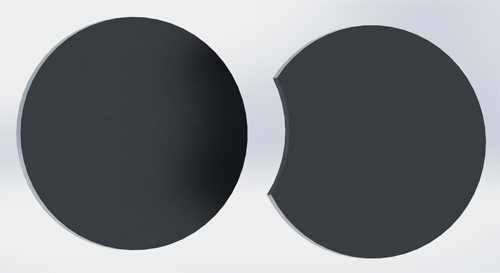 |
Depending on the offset of the punches, one, two or three clips may appear.
1-2] Elliptical clips
 |
| Clipped coins with elliptical clip |
This error is rare because it combines two press problems. The punches must be offset as for a curved type clip and a blank remains stuck in the sheet.
This results in the creation of 3 abnormal blanks.
 |
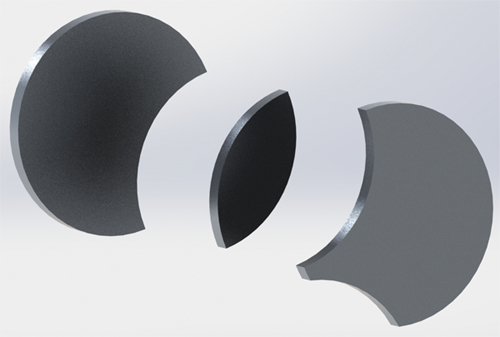 |
The first (yellow) is of the curved type, the second (orange) is of the elliptical type.
The third (in green) does not yet have a referencing because not yet found on the coins. But it is likely that it will happen.
1-3] Straight/Ragged clips
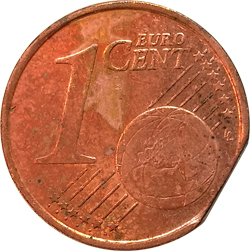 |
| Clipped coins with straight clip |
The straight/ragged clips are the result of a problem with positioning the sheet in the press. The punches that are towards an edge of the sheet cut incomplete blanks.
There are two types of clip:
1-3-a] Straight clips
As the name suggests, there is an punch on one side edge.
 |
This error has the characteristic of a straight cut of the blank.
1-3-b] Ragged clips
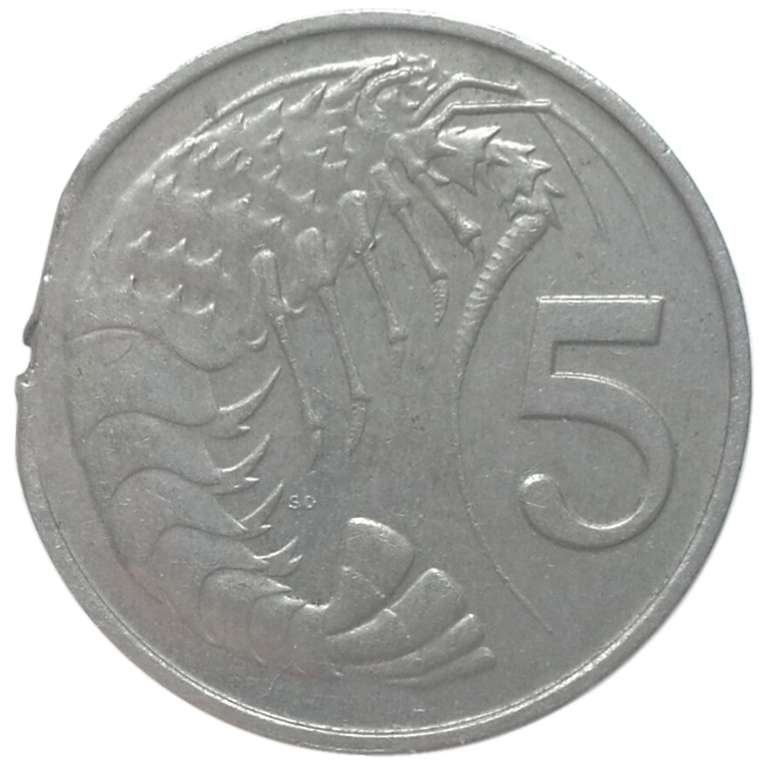
In this case, the punches are at the end of the sheet. This edge is irregular because it is not resized after rolling.
 |
 |
2] Physical characteristics of the error
I am going to present to you some characteristics that I have been able to observe and which will allow you to authenticate clipped coins.
2-1] Clipped coin on a monometallic blank or a bimetallic ring
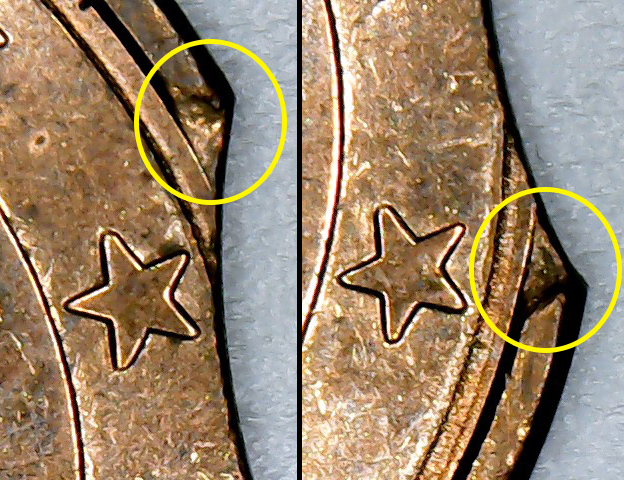
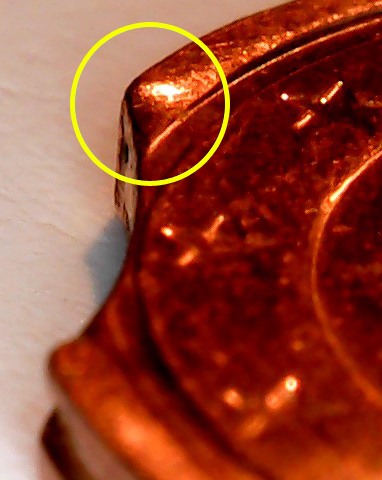
On the clipped coins at the level of a listel, one can observe that this one does not end in a clean way. This is due to a stretch of the metal of the listel during the strike.
 |
 |
On the bimetallic clipped coins on the ring, we can observe a stretching of the metal towards the clip zone.
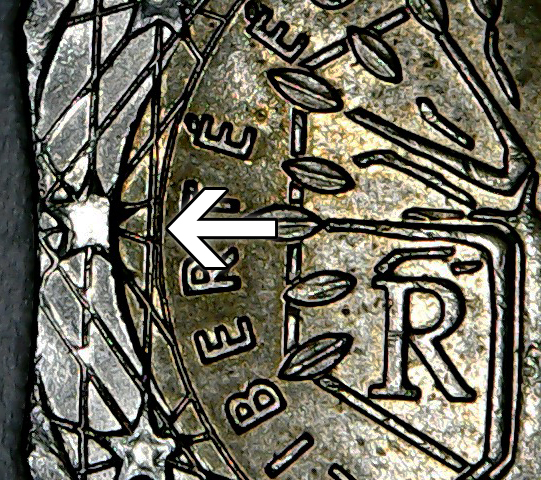 |
As this area is not retained by the collar, the metal of the core and crown stretches outward.
2-2] Clipped coin on bimetallic core
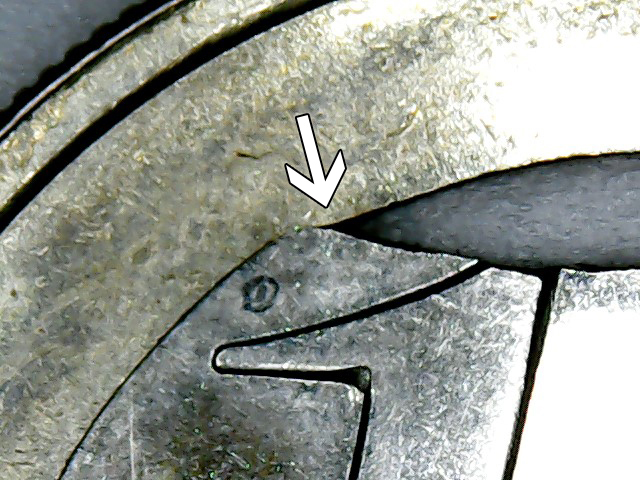
On the coins clipped on the insert, we can also observe a phenomenon of metal stretching.
 |
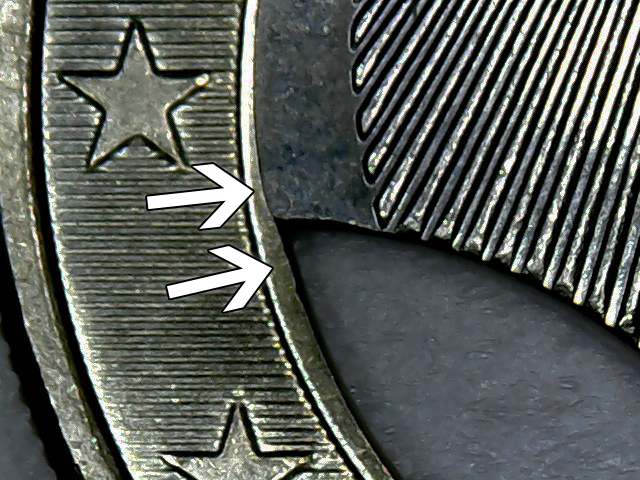 |
When struck, the metal of the ring stretches inwardly of the clip area.
2-3] Other observations
2-3-1] Size of the clip area
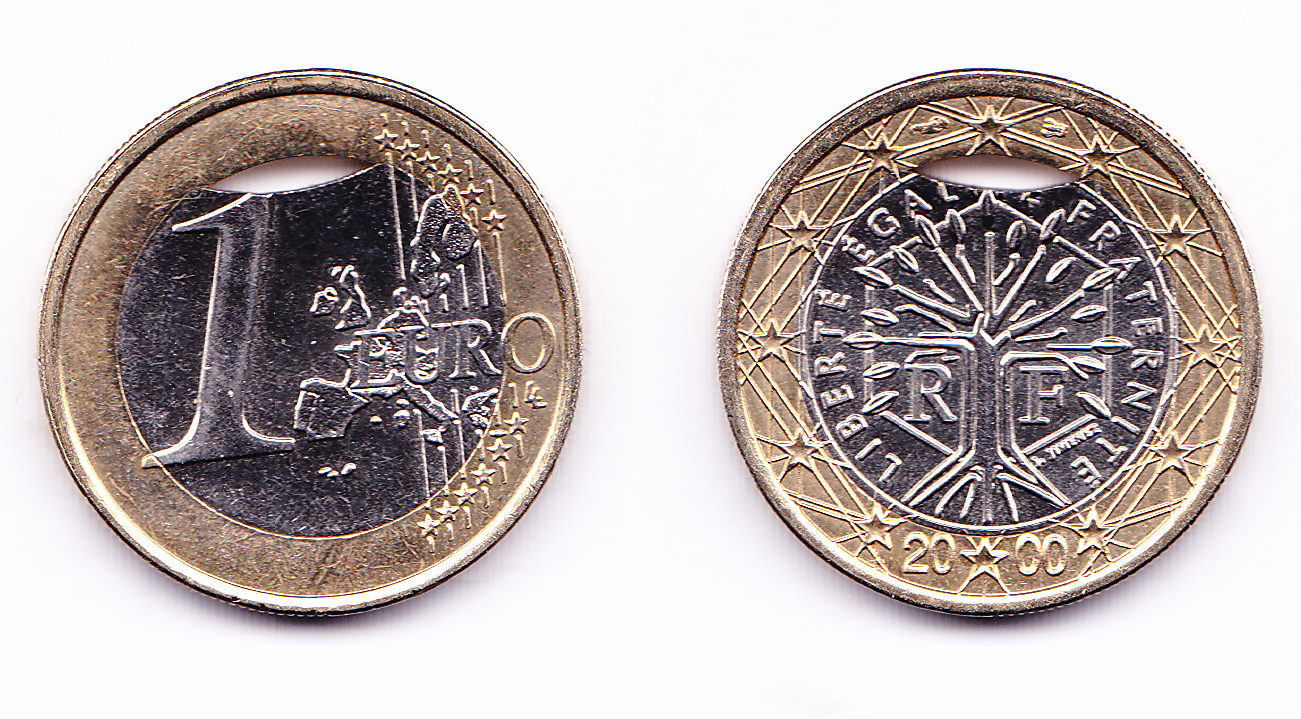
The size of the clip area should roughly match the size of the clipped planchet. The blank being deformed during striking (stretching of the metal towards the clipped zone) there is therefore an acceptable tolerance.
 |
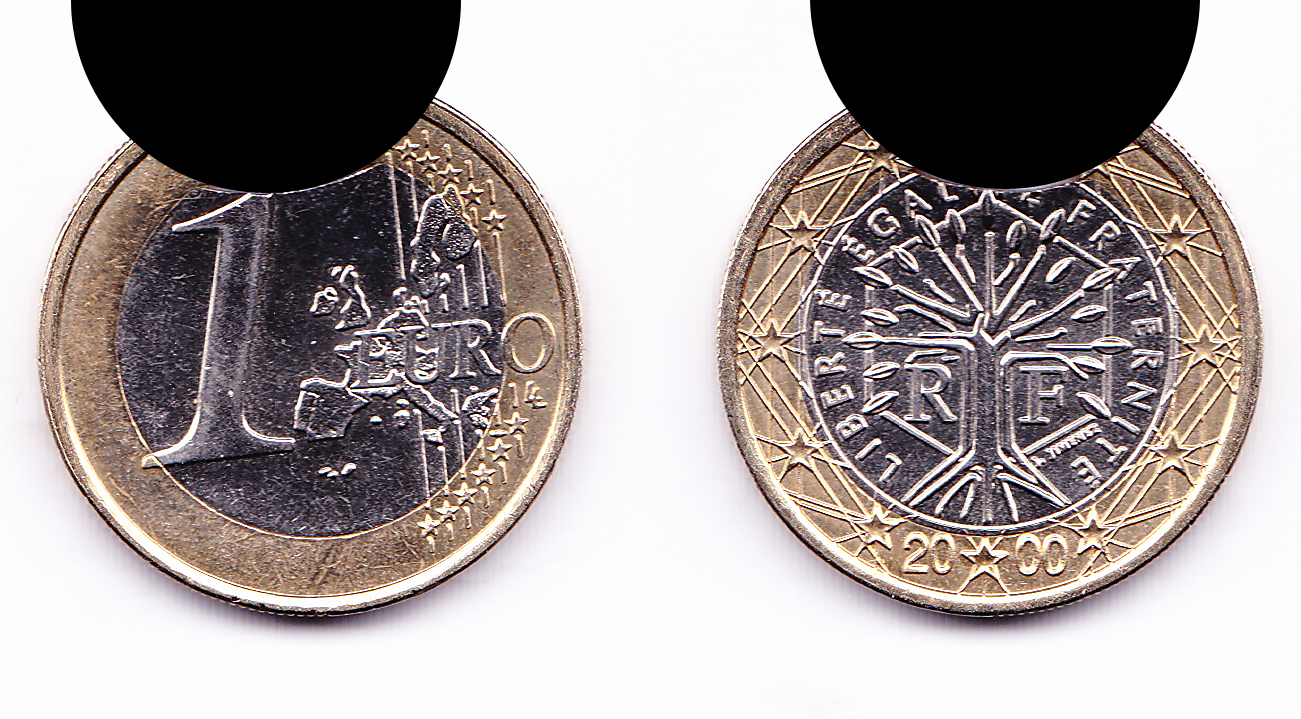 |
| The black area is the size of the core |
2-3-2] Observation of the edge
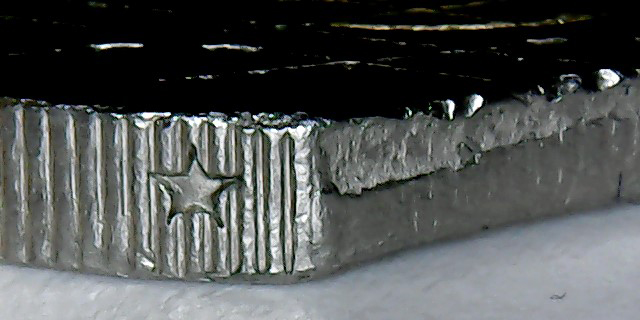
We can also sometimes observe (with good eyes or a microscope) the tearing of the metal during the cutting of the blank.
 |
2-3-3] Defect in front of a clip
We can also sometimes observe a defect in front of a clip.
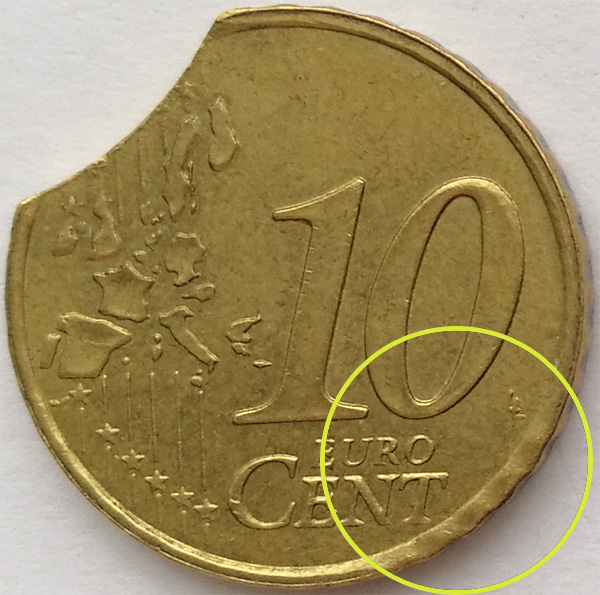 |
This is a problem that occurs during the edge rimming step and is accentuated during the striking of the blank.
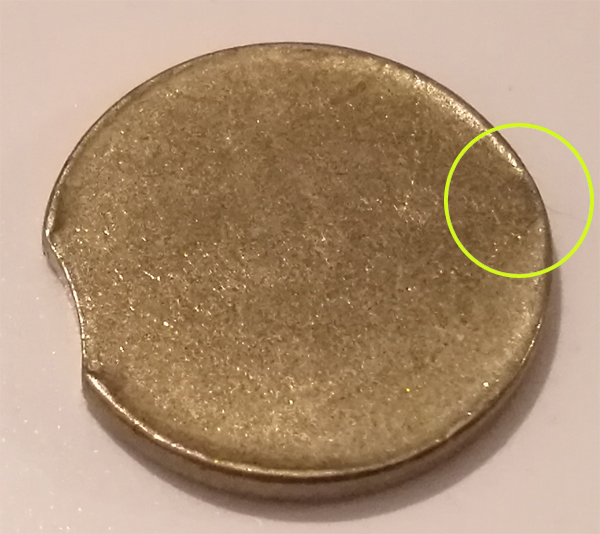 |
On this clipped blank with edge rimmed, we can see that this defect begins to appear before strike.
During rimming / marking, pressure is exerted on the edge of the blank. When a missing part is present, the pressure is lower in front of it.
This characteristic is sometimes referred to as the "Blakesley" effect.
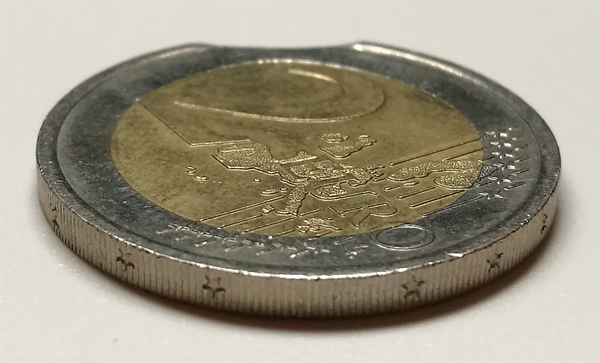
On coins with hollow inscriptions on the crown, another phenomenon appears:
The inscriptions are lower or nonexistent in front of the clip area.
 |
2-3-4] Stretching details
It is also interesting to study the details towards a clip. Here is a nice example:
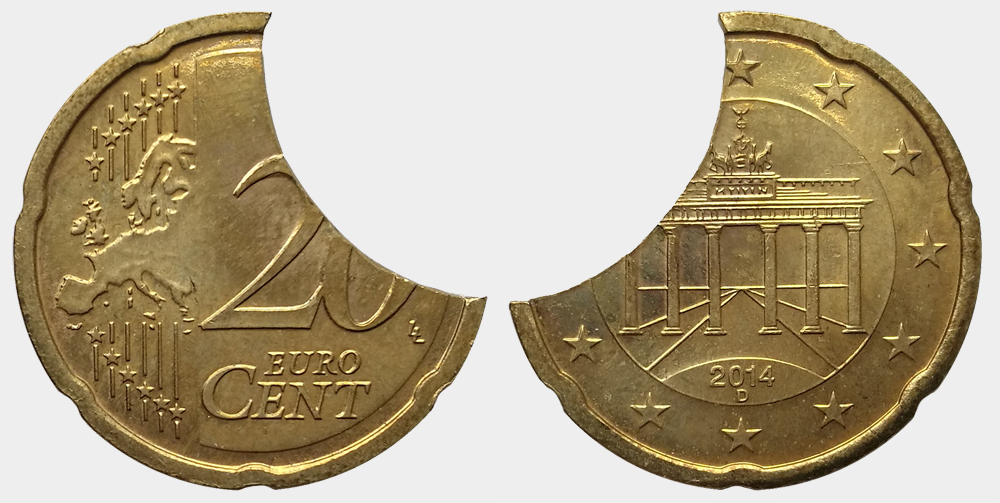 |
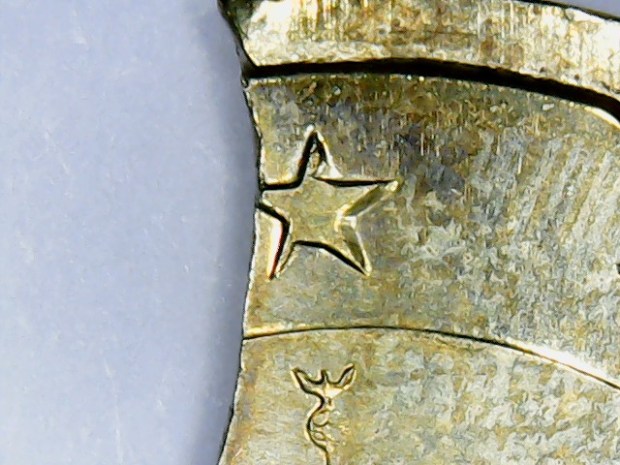
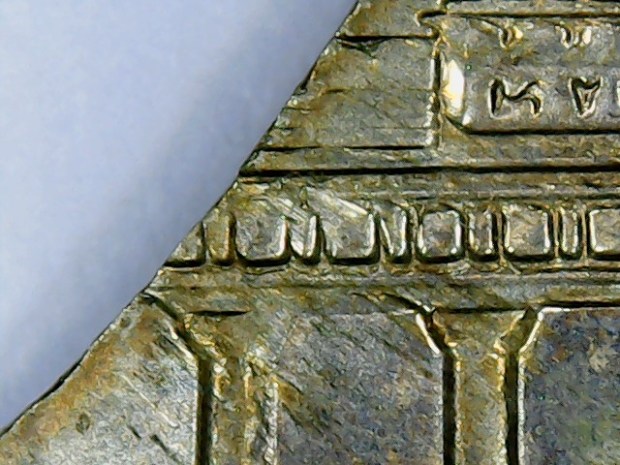
By viewing the part under a microscope, you can see the details stretching towards the clipped area.
 |
 |
3] Combinations clips
It may rarely happen that there is a combination of several types of clips on the same blank.
Here are some examples :
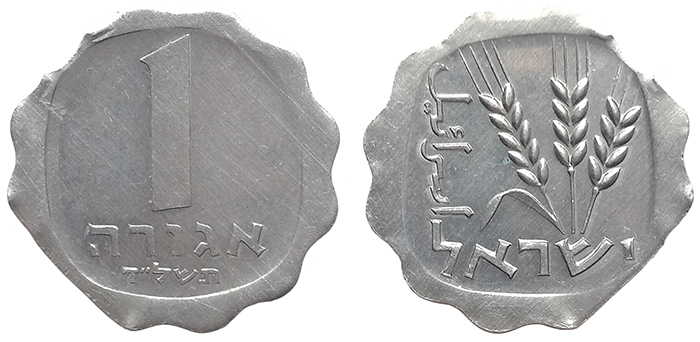 |
| Coin of Israel with a combination of a curved clip and a straight clip |
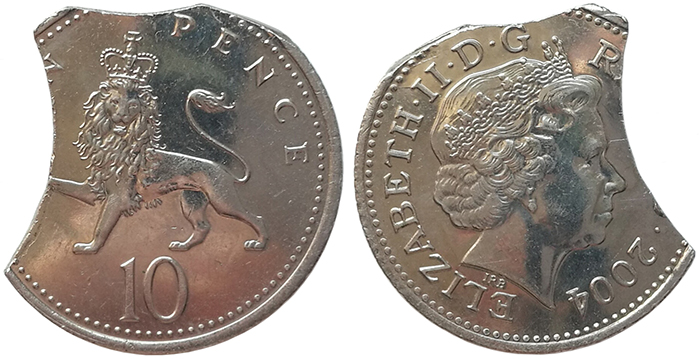 |
| Coin from the United Kingdom with a combination of two curved clips and a straight clip. A curved clip and a straight clip overlaps which is even rarer! |
4] Conclusion
The previous information allows you to authenticate a clipped coin so be careful when making a purchase!